
Spatial AI
Maps, SLAM, scene graphs, and spatial memory—so machines know where they are and what the scene means.
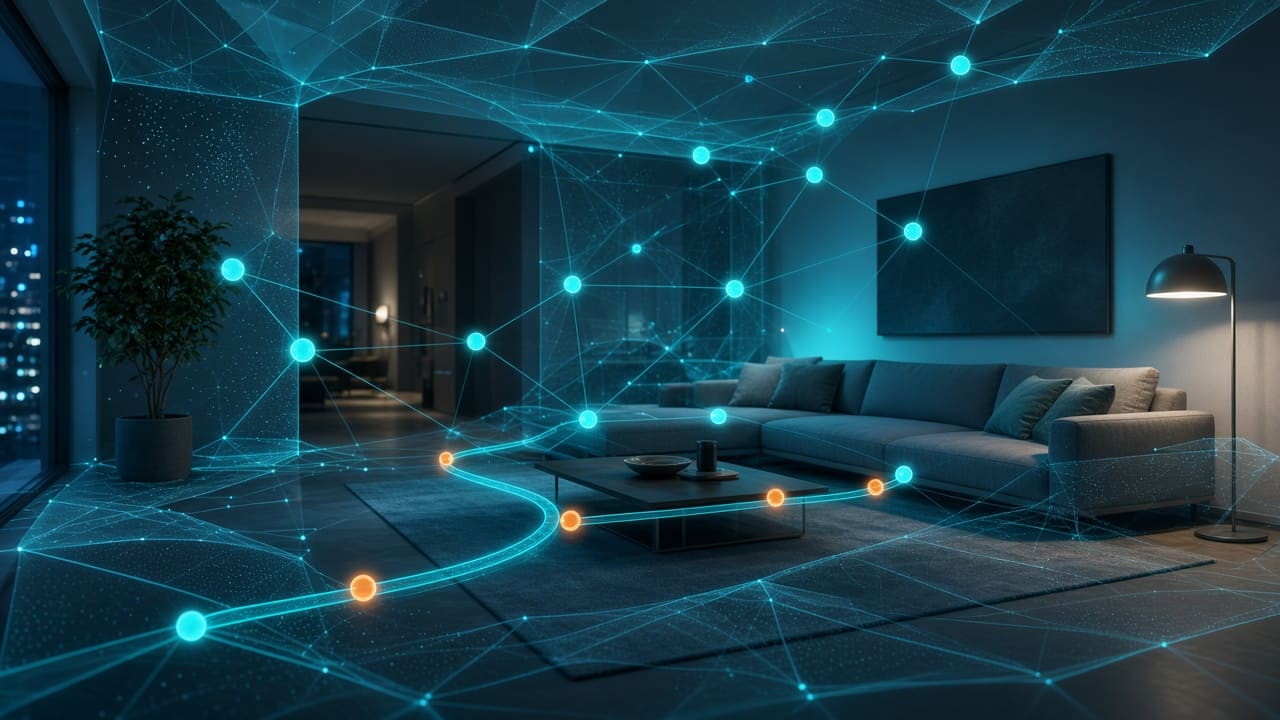
Space and scene—not the hand, not the mission executive.
Maps that drift, scenes that change, and rooms full of people are the normal case—not the exception. Spatial AI is how robots and edge systems keep a living model of where things are and what they mean.
This program covers 3D perception, localisation and mapping, scene graphs, and spatial memory that support planning over longer horizons. We design for dynamic workplaces, not static lab maps.
Spatial understanding powers RoboWorks, AgentFlow physical agents, and any product that must navigate or coordinate in the real world.
Spatial AI depth means localisation error under change: moved chairs, open doors, reflective floors, and people. Much of our work is replay on logged bags, synthetic scenes, and open datasets, with live robot mapping continued at partner or customer sites when a study needs fresh floors.
Scope: This program owns localisation, mapping, and spatial semantics. Hands and contact live in Dexterous Robotics; reusable behaviours in Physical Skill Intelligence; multi-robot traffic in Collective / Fleet Intelligence; long missions in Autonomous Physical Work.
Durable layers of the program.
Perception, mapping, semantics, and memory—the layers that keep a machine oriented as the world moves.
- 3D perception
- SLAM and localisation
- Mapping
- Point-cloud understanding
- Scene graphs
- Spatial memory
- Dynamic object tracking
- Human–robot spatial interaction
- Long-horizon spatial planning
- Multi-robot map sharing
Localise, map, remember—then plan on a living scene.
Our spatial stack layers classical and modern SLAM with semantic scene structure in software. Geometry and scene graphs are exercised on bags and sim worlds first; partner robots and sites supply the changing floors that stress-test release candidates.
Multi-robot map sharing and long-horizon planning hooks are first-class: a map that cannot leave one robot is only half a product.
Algorithms we study and implement
- Feature-based and lidar-inertial SLAM families (ORB-SLAM-class vision; LOAM / FAST-LIO-class lidar-inertial themes)
- Factor-graph optimisation (GTSAM-style) for pose and landmark consistency
- Dense / semi-dense reconstruction and TSDF or mesh maps where memory allows
- Semantic segmentation + scene-graph construction for objects, zones, and affordances
- Dynamic object tracking so people and carts do not permanently corrupt maps
- Multi-session localisation and map merging for fleets and shift handovers
Things we measure
- Absolute / relative trajectory error on labelled indoor routes (ATE/RPE-style reporting)
- Relocalisation success after kidnapping and lighting change
- Map memory growth vs. hours of operation
- Semantic label stability across days on the same floor
- Shared-map consistency when two robots explore overlapping areas
Maps earn trust when they survive replay—and a partner Tuesday afternoon.
We evaluate on datasets and simulated floors that change, then on partner sites when available. A pristine Sunday-night map is a starting point, not evidence of Spatial AI maturity.
- Trajectory error on named bags/sim suites with sensor and lighting conditions declared
- Before/after map diffs when furniture moves (synthetic or partner captures)
- Relocalisation trials after forced kidnapping in replay
- Fleet merge experiments in multi-agent sim, then partner fleets when scheduled
- API contract for AgentFlow / RoboWorks planners consuming spatial memory
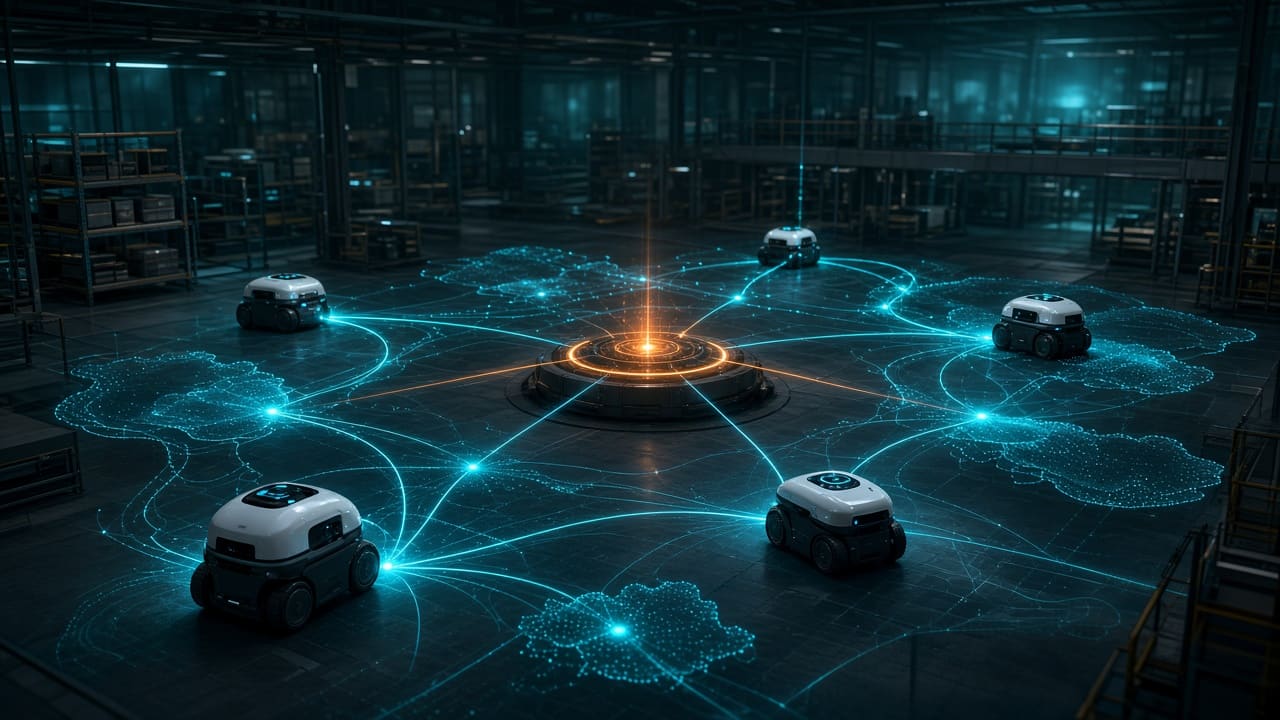
An open field, not a closed stack.
Spatial AI sits beside autonomous-vehicle stacks, warehouse robotics, and AR mapping. We focus on product robots and edge systems that share human spaces.
Adjacent work
- Mobile robotics perception vendors
- SLAM and mapping platforms
- AV perception stacks
- AR / spatial-computing companies
- Academic 3D vision labs
Partners and complements
- ROS 2 navigation and perception
- NVIDIA Isaac / Jetson
- Depth and lidar sensor partners
- RoboWorks
- AgentFlow
- Collective / Fleet Intelligence
A path that compounds over time.
From reliable localisation to semantic scenes and shared spatial memory across robots and shifts.
- Robust localisation in changing indoor spaces
- Semantic scene graphs for everyday objects and zones
- Spatial memory that survives lighting and layout changes
- Shared maps across robots and shifts
- Planning hooks for AgentFlow and RoboWorks missions