Embodied Human Intelligence
Grounded whole-body intelligence—intent, dynamics, and constraints so virtual understanding can take physical responsibility.
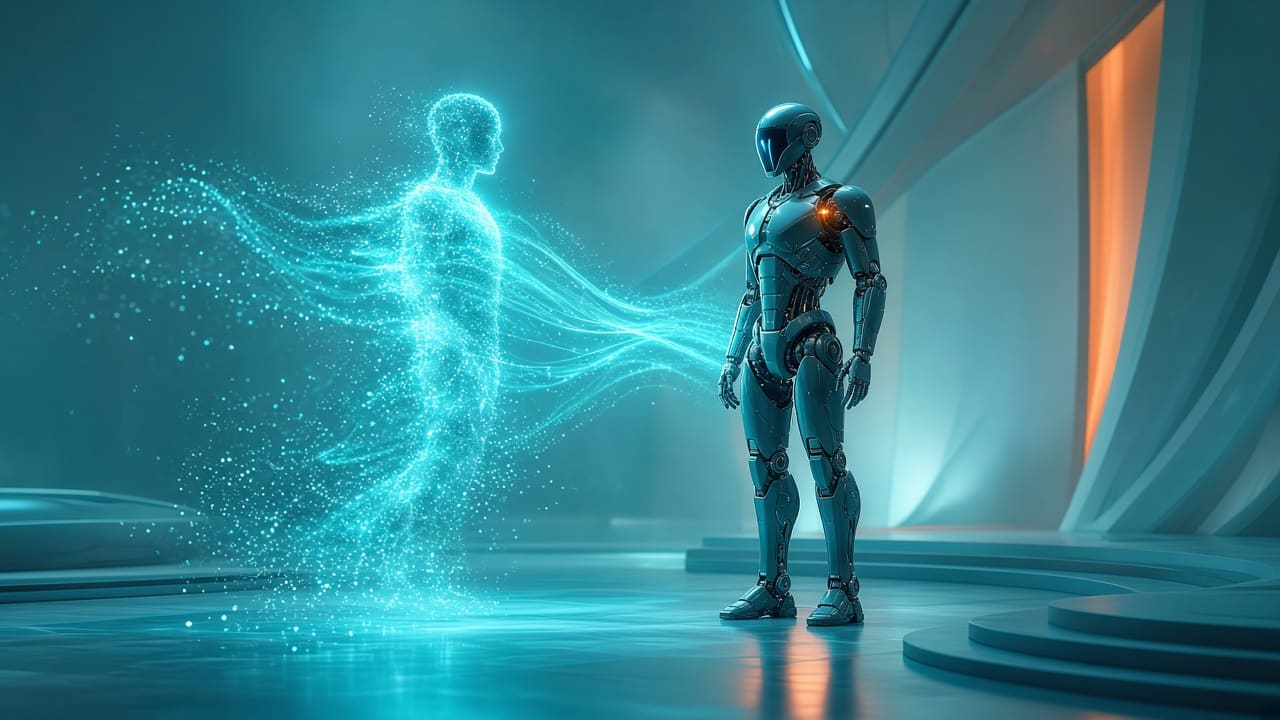
Body-grounded cognition—not a single hand skill and not the fleet scheduler.
Digital agents can plan and talk. Embodied intelligence must also perceive space, respect physics, and carry intent through contact with the world.
This program brings together world models, spatial understanding, physical skills, and human intent so virtual reasoning can become reliable physical behaviour—on companions, carts, and other RoboWorks platforms.
It is the bridge between software intelligence and machines that share floors, tools, and tasks with people.
Embodiment is where perception, language, and control finally share a body budget. We study whole-body coordination and grounded policies in simulation (Isaac Lab and related) with explicit torque, balance, and contact constraints, then continue on partner platforms for hardware-in-the-loop milestones.
Scope: This program owns embodiment: connecting intent and perception to a constrained body (balance, torque, contact-aware whole-body control). It sits above Spatial AI and Dexterous Robotics, and below Autonomous Physical Work’s mission executive. Fleet coordination stays in Collective / Fleet Intelligence.
Durable layers of the program.
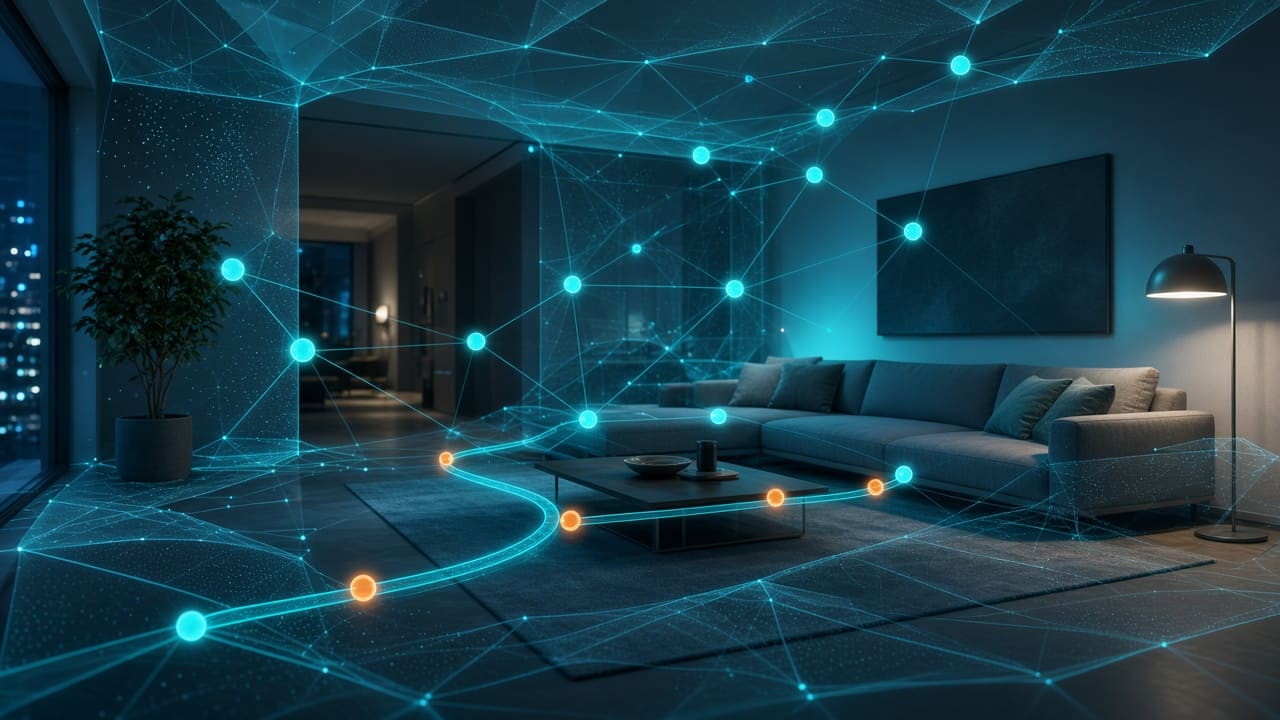
World models, intent, spatial grounding, and body-aware execution—without absorbing map SLAM, hand grasping, or multi-robot allocation.
- World models
- Intent understanding
- Spatial intelligence
- Physical skill execution
- Sim-to-real transfer
- Human oversight hooks
- Embodied planning
- Contact-aware control
- Multi-modal grounding
- Safety envelopes
Virtual understanding becomes physical only under constraints.
Embodied intelligence research asks how high-level intents become feasible motions under real constraints. We combine model-based control (kinematics, dynamics, MPC) with learning where models are incomplete—validated in physics simulation first, then on partner hardware when a milestone requires it.
The program links Spatial AI (where), Dexterous Robotics (contact), and Physical Skill Intelligence (reusable behaviours) into one body-aware stack.
Algorithms we study and implement
- Inverse kinematics / dynamics and whole-body quadratic programs for constrained motion
- Model-predictive control for short-horizon tracking under torque and collision limits
- Contact-aware planning themes (including contact-implicit ideas where appropriate)
- State estimation that fuses proprioception, vision, and force for grounded action
- Policy architectures that condition on scene and skill tokens—evaluated under domain shift
- Sim-to-real randomisation schedules that target the failure modes we actually see
Things we measure
- Tracking error under payload and disturbance
- Constraint violation counts (torque, joint, collision proxies)
- Sim-to-real gap on a fixed evaluation suite
- Recovery time after slip, bump, or perception dropout
- Compute budget on embedded targets vs. desktop baselines (sim profiles + partner boards when available)
Bodies convince with sim constraint plots—and partner logs when hardware is in play.
If a motion only works with safety interlocks disabled in sim or on a partner cell, it is not evidence. We keep the interlocks on and measure what remains.
- Constraint-aware tracking metrics in simulation with logs retained
- Paired sim and partner-hardware episodes when a study advances beyond simulation
- Ablation of vision vs. proprioception to show what the body actually uses
- Thermal and compute envelopes on the deployment board
- Skill hand-off criteria into RoboWorks / AgentFlow mission layers
An open field, not a closed stack.
Embodied AI research is crowded. We stay grounded in product platforms and open robotics ecosystems rather than closed demo stacks.
Adjacent work
- Embodied AI research labs
- Humanoid and mobile-manipulator startups
- Foundation-model robotics groups
- Simulation-first robotics platforms
Partners and complements
- ROS 2
- NVIDIA Isaac / Jetson
- Isaac Lab and simulation partners
- RoboWorks
- AgentFlow
- Spatial AI program
- Dexterous Robotics program
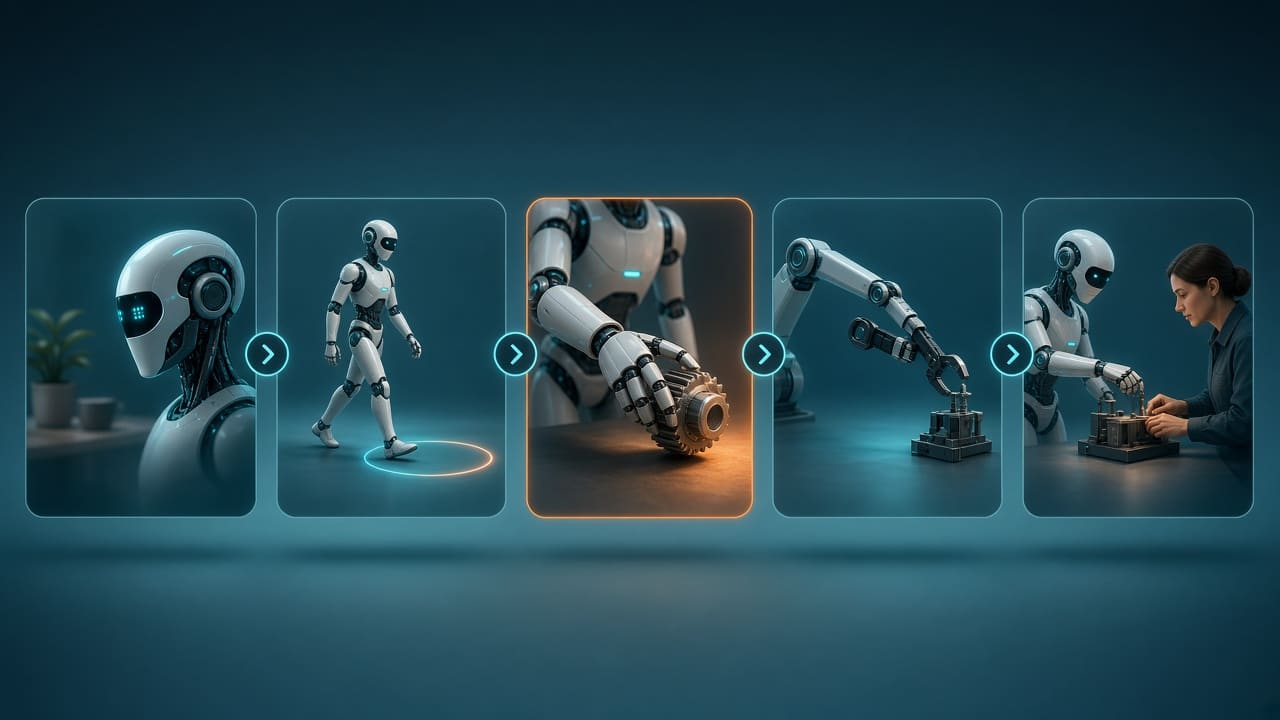
A path that compounds over time.
From assisted teleoperation to increasingly autonomous embodied behaviours that still invite human approval where it matters.
- Grounded perception and intent on RoboWorks platforms
- Skill execution with spatial awareness
- Sim-to-real loops that shorten iteration
- Safer autonomy with clear human gates
- Shared behaviour libraries across robot families