Autonomous Physical Work
Mission executives—plan, monitor, recover, and verify multi-step physical work with human approval where it matters.
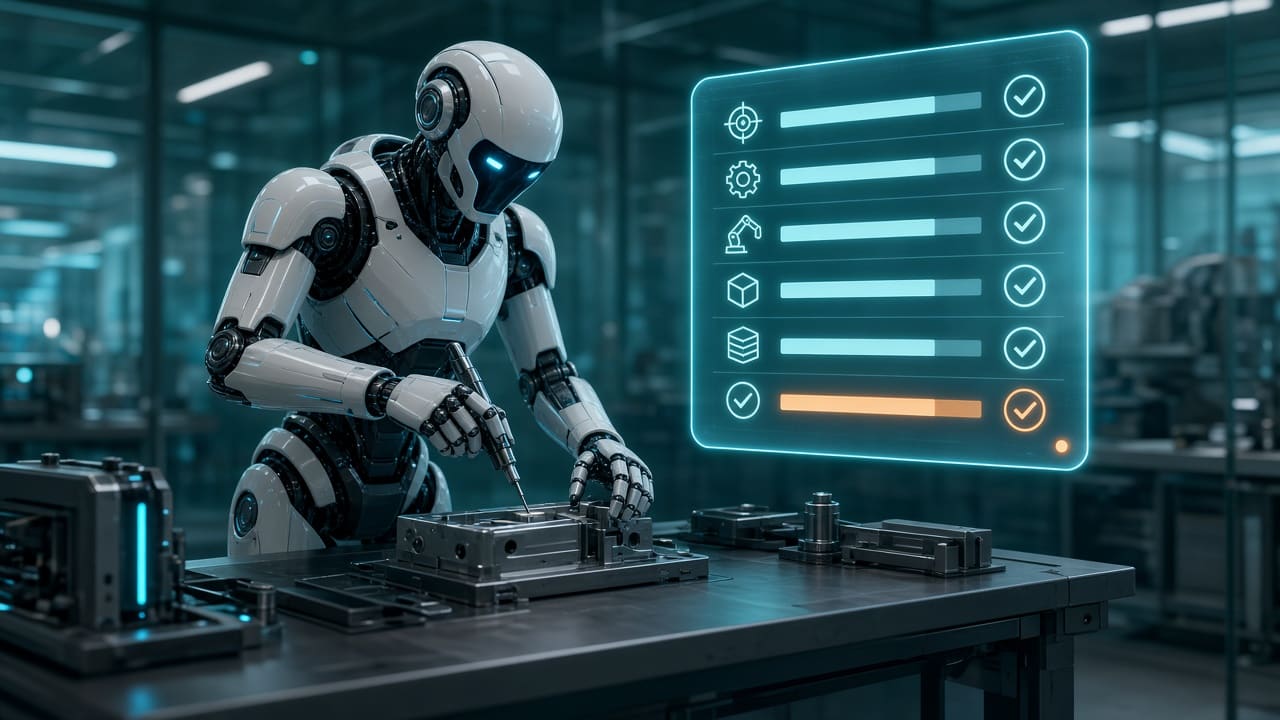
Verified missions—not the map, not the hand, not the skill atom.
A useful autonomous system does more than move. It accepts intent, plans a multi-step job, executes with awareness of space and contact, and proves what happened—while leaving room for a person to approve sensitive steps.
This program connects AgentFlow, Spatial AI, physical skills, dexterity, and robotics into work systems that can take responsibility for longer tasks in real environments.
The research question is practical: how do we ship autonomy that partners can trust on a factory floor, clinic, or shared workplace?
Autonomy for physical work is orchestration under interruption: navigation, manipulation, human traffic, and tool constraints. We deepen into planners, behaviour trees, and recovery policies in simulation and logged mission replay, then continue live warehouse- or care-floor trials with partners.
Scope: This program owns work orchestration: task graphs, monitoring, recovery, and verification. It consumes Spatial AI, skills, and embodiment; it does not redefine SLAM, grasp, or teaching. Multi-robot assignment and radio coordination live in Collective / Fleet Intelligence.
Durable layers of the program.
Planning, execution monitoring, and recovery—so missions stay auditable without rebuilding perception or dexterity from scratch.
- Intent capture
- Task decomposition
- Spatial planning
- Skill composition
- Execution monitoring
- Verification and logging
- Human approval gates
- Recovery behaviours
- AgentFlow integration
- Safety policies
Mission autonomy as planning + execution + recovery.
Autonomous Physical Work combines task planning, navigation, and manipulation into missions that can be paused, resumed, and explained. Explicit mission graphs are exercised in sim and bag replay first; partner sites supply the interruptions that no synthetic world fully captures.
Failure is normal: blocked aisles, empty supply bins, lost localisation. Recovery policies are part of the research product, not an afterthought.
Algorithms we study and implement
- Hierarchical task networks / PDDL-inspired planning for mission decomposition where models exist
- Behaviour trees for reactive execution with readable recovery branches
- Nav2-class navigation with keepout zones and dynamic obstacle handling
- Manipulation sub-missions via MoveIt / skill libraries with timeouts and retries
- Execution monitoring: expectation vs. observation with explicit replanning triggers
- Human-in-the-loop handoff protocols when autonomy confidence drops
Things we measure
- Mission completion rate under scripted interruptions
- Mean time to recovery after a declared fault class
- Idle time waiting on humans vs. productive autonomous time
- Navigation and manipulation failure contributions separated
- Auditability: can an operator replay why a branch was taken?
Missions prove themselves when interrupted on purpose—in sim, then with partners.
We inject faults in simulation and replay: blocked paths, missing objects, localisation glitches. Partner site drills confirm the same recovery branches when a program advances. Autonomy that only works on the happy path is not ready for physical work.
- Fault-injection suite with pass/fail per recovery branch
- Mission replay demos for operators (not only engineers)
- Separation of navigation vs. manipulation failure budgets
- Comparison of fully scripted vs. planned missions on the same floor
- Handoff UX review before claiming AgentFlow integration

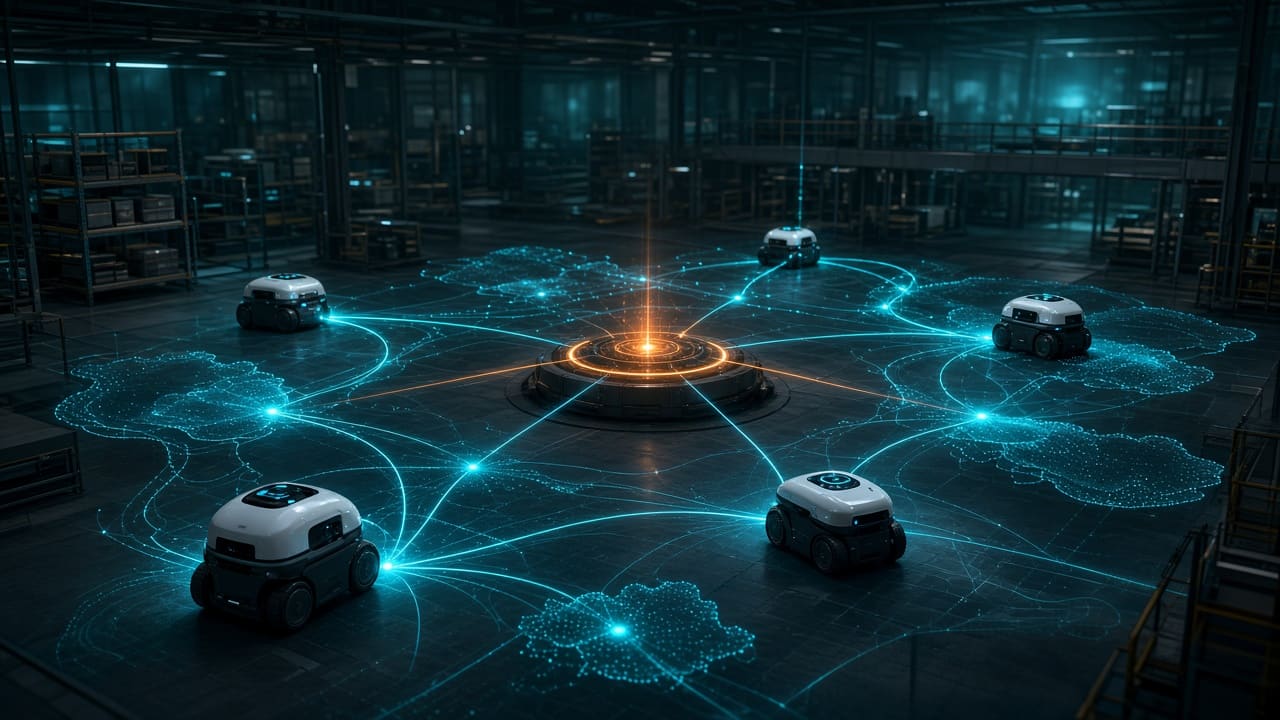
An open field, not a closed stack.
Warehouse autonomy, industrial orchestration, and agent frameworks all overlap here. We emphasise verified work with clear human oversight.
Adjacent work
- Warehouse robotics platforms
- Industrial orchestration vendors
- Autonomous mobile robot fleets
- Agent-based robotics startups
Partners and complements
- AgentFlow
- RoboWorks
- ROS 2
- NVIDIA Isaac
- Spatial AI
- Physical Skill Intelligence
- Collective / Fleet Intelligence
A path that compounds over time.
From assisted multi-step jobs to increasingly autonomous missions that still show their work.
- Intent-to-plan pipelines with human review
- Verified execution of composed skills
- Recovery and escalation that operators can trust
- Tighter AgentFlow + RoboWorks product loops
- Multi-robot jobs with shared verification