

Services Akhila Labs
IOT & SENSORS SOLUTION
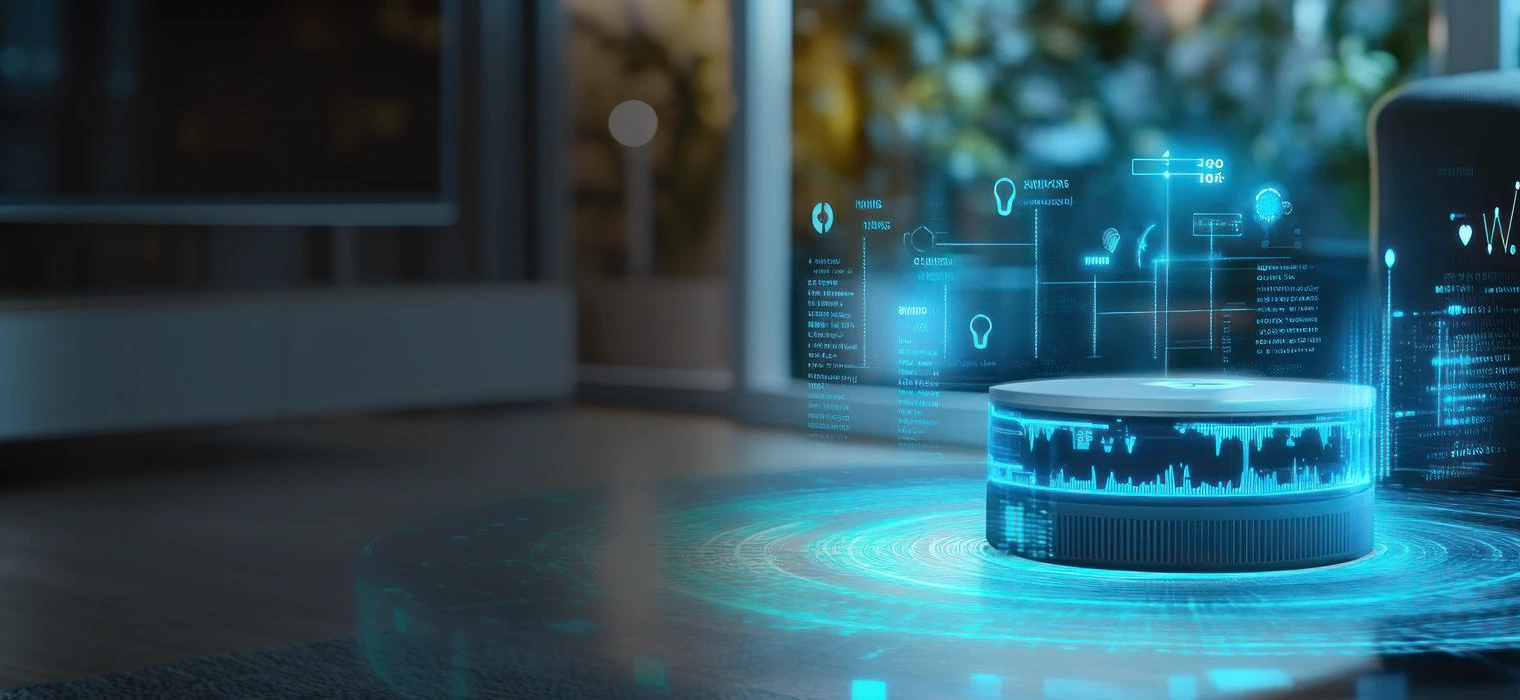
End-to-end IoT platforms integrating multi-modal sensors, low-power connectivity, edge processing, and cloud analytics for real-time monitoring, predictive insights, and autonomous response across industries.
Key Value Propositions
Akhila Labs delivers compliance-first, medical-grade wearables with end-to-end engineering for
fast, regulatory-ready, and scalable digital health solutions.


Industry Problem
Statement
Organizations across sectors are drowning in data but starving for actionable intelligence
Organizations across industries generate massive volumes of data, yet struggle to transform it into timely, actionable intelligence that drives real decisions.

Sensor fragmentation
Different vendors use incompatible protocols (Modbus, Bacnet, OPC-UA, proprietary APIs), creating silos and expensive integration projects.

Data quality issues
Missing data, sensor drift, synchronization errors, and poorly calibrated devices lead to unreliable analytics and false alarms.

Legacy system lock-in
Existing building management systems, manufacturing execution systems, and SCADA platforms were designed decades ago. Integrating modern IoT is expensive and risky.

Bandwidth and cost constraints
Continuous streaming of raw data to the cloud is unaffordable in large deployments (thousands of sensors); edge intelligence is essential.

Skill gaps
Most organizations lack the expertise to design multi-layer IoT architectures, secure networks, and maintain device fleets.

Real-time expectations
Users expect instant alerts and dashboards, but legacy data pipelines introduce hours of latency.
Our Solution
Approach
Sensor Tier & Integration
- Our sensor tier integrates diverse sensing technologies—including motion, audio, vision, environmental, and biomedical sensors—into a unified system architecture. We ensure seamless sensor fusion, precise synchronization, cloud intelligence layers.

Sensor selection
- Standard off-the-shelf sensors (Bosch, SenseAir, Vaisala) or custom biomarkers and proprietary sensors.

Calibration & data quality
- Factory calibration and continuous self-tests to ensure accuracy; drift detection and remediation.
Sensor interfaces
- I²C, SPI, UART, ADC, 1-Wire, Modbus, and custom protocols bridged to a unified data model
Connectivity Stack
Connectivity Stack Architecture
Our connectivity stack spans the device, gateway, and backhaul layers, supporting short-range, low-power technologies such as BLE 5.x, Wi-Fi 6, Zigbee, and Thread/Matter, alongside wide-area options including LoRaWAN, NB-IoT, LTE-M, and cellular 4G/5G. Hybrid network architectures and dual-radio designs with automatic failover ensure resilient connectivity in RF-challenged environments. Secure, zero-touch provisioning with certificate-based authentication protects devices from spoofing and enables trusted, scalable deployments.


Edge Intelligence & Gateways
Edge Intelligence & Gateway Architecture
Our edge gateways perform real-time local processing using platforms such as Zephyr, Yocto, and Docker to enable analytics, anomaly detection, and on-device automation. Flexible rules engines support immediate, event-driven actions, while offline-capable operation ensures all critical logic runs locally with the cloud used only for non-real-time functions like logging and analytics. Secure over-the-air updates keep gateway and sensor firmware and logic continuously up to date without user intervention.
Cloud Platform & Analytics
Cloud Platform, Data Management, and Advanced Analytics
Our cloud platform leverages optimized time-series databases like InfluxDB, TimescaleDB, or proprietary backends to efficiently store billions of sensor readings. Real-time dashboards provide live KPIs, historical trends, and anomaly visualization, while integrated ML analytics enable predictive insights such as fault detection, demand forecasting, and energy optimization


Security & Compliance
Data Security and Regulatory Compliance
Our security and compliance framework ensures end-to-end protection with TLS for cloud communication, DTLS for constrained devices, and symmetric encryption for data at rest. Role-based access control, audit logs, and multi-tenant isolation safeguard system access while adherence to regulations such as HIPAA, ISO 27001, and GDPR ensures industry-specific compliance
Use Cases & Applications
Akhila Labs supports a wide spectrum of healthcare and wellness applications:
Smart buildings
Occupancy, temperature, humidity, air quality, and energy monitoring for HVAC optimization, space utilization, and wellness.
Smart cities
Parking availability, traffic flow, air quality, noise levels, and public safetysensors informing urban planning and emergency response.
Factory & manufacturing
Equipment vibration, temperature, pressure, and energy monitoring for predictive maintenance and process optimization.
Healthcare facilities
Patient monitoring (beds, vital signs), environmental controls, asset tracking, and infection control compliance.
Continuous Glucose Monitoring (CGM) Ecosystems
Equipment vibration, temperature, pressure, and energy monitoring for and process optimization.
Cold chain & logistics
Temperature, humidity, and vibration tracking during storage and transport of pharmaceuticals, food, and electronics
Smart agriculture
Soil moisture, nutrient levels, weather, and pest sensors guiding irrigation and pesticide use for crop optimization.
Disaster response
Distributed sensors detecting flooding, earthquakes, and air quality, enabling rapid emergency response.
Utilities & water systems
Grid voltage/frequency, transformer temperature, water quality, and flow metering for reliability and conservation.
Clinical Trials & Digital Biomarkers
Multi‑modal patches and sensor kits that capture continuous biometrics and behavioral data for decentralized trials.
Technologies & Tool

Sensors & Hardware
Bosch BME, SenseAir K30, Vaisala, Omron, Digi, Advantech, custom PCB and sensor

Wireless & Connectivity
BLE 5.x, Wi-Fi 6, Zigbee, Thread/Matter, LoRaWAN, NB-IoT, LTE-M, 4G/5G

Gateways & Edge Platforms
Raspberry Pi, NVIDIA Jetson, NXP i.MX, Linux containers (Docker), Yocto/Pok

Cloud Platforms
AWS IoT Core, Azure IoT Hub, GCP Cloud IoT, InfluxCloud, Mosquitto MQTT broker

Analytics & Dashboards
Grafana, InfluxDB, Kubernetes, TensorFlow, Python pandas/scikit-learn, custom web UIs

Integration & APIs
REST, GraphQL, MQTT, Webhooks, Zapier, IFTTT, OPC-UA/Modbus bridge
Frequently Asked Questions
At Akhila Labs, embedded engineering is the foundation of everything we build. We go beyond writing firmware that runs on hardware—we engineer systems that extract maximum performance, reliability, and efficiency from the silicon itself.
What wireless protocol should we use for our IoT devices?
It depends on range, battery life, and throughput needs. BLE/Wi-Fi for short-range, high bandwidth. LoRaWAN/NB-IoT for long-range, low power. Thread/Matter for mesh networks. We help you select based on your deployment.
Can we integrate existing building management systems (BMS) with your IoT platform?
Yes. We bridge legacy BMS via OPC-UA, Modbus, or direct API, translating data into a unified MQTT/REST stream. No rip-and-replace needed.
How long does it take to deploy an IoT network?
Pilot: 4–6 weeks (50–100 sensors). Full rollout: 3–6 months depending on scale and building complexity. Pre-built templates accelerate time-to-value.
Can sensors operate outdoors in harsh weather?
Yes. We select IP67/IP68 rated sensors and protective enclosures. RF performance is validated in rain, snow, and extreme temperatures. Regular maintenance checks ensure long-term reliability.
How do you minimize false alarms and alert fatigue?
Through intelligent thresholding, temporal correlation (alerts persist only if sustained), and anomaly scoring. Machine learning learns baseline patterns to reduce spurious triggers.
Can edge gateways operate without cloud connectivity?
Yes. All critical logic and automation runs locally. Cloud is used for non-real-time operations (logging, long-term analytics, remote monitoring). Devices gracefully degrade if the cloud link is lost.
What is the typical cost per sensor for a large deployment?
Hardware: $10–$50 per node depending on sensor types. Installation, integration, and cloud services: typically $50–$200 per node in total first-year cost. Economies of scale reduce per-unit cost at 1,000+ node scales.
Subscribe to the Akhila Labs Newsletter
Get the latest insights on AI, IoT systems, embedded engineering, and product innovation — straight to your inbox.
Join our community to receive updates on new solutions, case studies, and exclusive announcements.