

Hardware-aware optimization: models tailored to specific NPU architectures (Arm Ethos-U, Qualcomm Hexagon, Nvidia Jetson)
Model compression expertise: quantization, pruning, distillation, achieving 10-100x model size reduction
Real-time inference: <20ms latency on edge devices for computer vision, <50ms for complex models
Privacy-first: sensitive data never leaves the device; only insights sent to cloud
Production-proven: 50+ computer vision and anomaly detection systems deployed at scale
Ahmedabad advantage: integrated hardware + firmware + AI expertise for true edge intelligence
OVERVIEW
WHAT IS EDGE AI?
- Latency: Decisions happen in milliseconds, not seconds (critical for robotics, autonomous systems)
Bandwidth: Terabytes of raw video/sensor data don’t need uploading; only insights transmit
Privacy: Personal biometric data, medical info, industrial secrets stay on-deviceRunning AI on constrained hardware is fundamentally different from cloud AI. It requires deep expertise in:Model compression without destroying accuracy
Hardware-specific optimization (leveraging NPUs, DSPs, GPU cores)
Inference engine selection and tuning
Real-world data handling (missing values, domain shift)At Akhila Labs, we don’t just convert cloud models to edge—we redesign from the ground up for constrained devices. Whether it’s gesture recognition on a wearable (8-bit quantization, 500KB model) or 4K video anomaly detection on edge gateways (INT8, 50ms latency), we make AI practical and deployable.


Core Edge AI & Computer Vision Competencies
Model Optimization & Compression
- We compress production models using quantization (INT8, INT4, binary), pruning (removing unimportant weights), knowledge distillation (training small models from large ones), and neural architecture search (NAS). Typical results: 50-100x model size reduction with <1% accuracy loss.
Hardware-Aware Inference
Different hardware requires different optimization. We leverage
- ARM Cortex-M with microNPU: TinyML (TFLite Micro) for ultra-low power, 256KB RAM
ARM Ethos-U accelerators: specialized tensor operations for mobile/edge
Qualcomm Hexagon DSP: vectorized signal processing on Snapdragon
Nvidia Jetson: full-powered GPU for high-resolution vision tasks
Google Coral TPU: inference acceleration at 0.5W power draw


Computer Vision & Visual Inspection
We build systems that "see" and "understand"
- Defect detection: automated optical inspection for manufacturing (scratches, dents, misalignments)
Object tracking & counting: people counting for retail, vehicle tracking for traffic
Pose estimation & gesture recognition: body keypoints for fitness, gaming, safety
Facial recognition & biometrics: secure authentication with on-device embeddings (not reconstructible)
Time-Series & Anomaly Detection
Manufacturing, IoT, and healthcare generate continuous streams of data. We detect anomalies before failure
- Predictive maintenance: acoustic signatures (motor bearing faults), vibration patterns (imbalance detection)
Activity recognition: accelerometer/gyroscope data for fall detection, gesture recognition
Sensor fusion: combining multiple sensor streams (ECG + motion + PPG for arrhythmia detection)


Edge GenAI & Natural Interfaces
We're pushing boundaries: Small Language Models (SLMs) and voice interfaces running entirely on-device
- Keyword spotting: wake word detection consuming <1mW on DSP
Voice commands: local speech recognition without cloud round-trip
Local summarization: running quantized LLMs for context-aware responses

DIFFERENTIATORS
KEY DIFFERENTIATORS
True Hardware-Aware Optimization
We don’t use generic tools; we understand silicon. We profile each model layer against specific NPU architectures (Arm Ethos-U, Qualcomm, Intel), ensuring efficient tensor mapping and maximum performance per watt.

Multi-Framework Proficiency
TensorFlow Lite, PyTorch Mobile, ONNX Runtime, OpenVINO, TVM—we’re framework-agnostic and optimize for your specific hardware target.
Privacy-First Architecture
User data stays local. Only insights and aggregated patterns leave the device. This is essential for medical devices (HIPAA), consumer products (GDPR), and industrial systems (trade secrets).
Real-World Deployment Experience
50+ computer vision and anomaly detection systems in production. We’ve handled the messy reality: domain shift (training data ≠ real-world data), missing values, drift over time, rare events.
On-Device ML Continuous Learning
We implement federated learning and on-device model tuning: devices improve their local models by learning from local data, syncing improvements to cloud without sending raw data.
Ahmedabad Deep Tech Advantage
Integrated hardware + firmware + AI expertise under one roof. Unlike pure-play ML consultants, we understand how AI algorithms map to silicon-level constraints.
Synthetic Data Generation Expertise
Real-world data is scarce for “rare events” (manufacturing defects, medical anomalies). We use GANs and 3D rendering to bootstrap model performance with synthetic training data before physical collection.
Integration with IoT & Embedded Systems
Because of our embedded DNA, we excel at integrating AI with hardware. We manage real-time capture, preprocessing, inference, and actuation within tight power and latency budgets.
Overview
Technical Capabilities Deep Dive
Inference Engines & Frameworks
- TensorFlow Lite (TFLite): industry-standard for mobile/edge, excellent MCU support
- PyTorch Mobile: optimized PyTorch inference with shape flexibility
- ONNX Runtime: hardware-agnostic model exchange with broad platform support
- Arm CMSIS-NN: DSP-optimized kernels for Cortex-M, leveraging multiply-accumulate units
- TVM (Apache TVM): compiler framework for heterogeneous hardware optimization
- ncnn, MNN: specialized lightweight inference engines
Hardware Accelerators & Targets
- ARM Cortex-M (M4, M7, M33): ultra-low power inference <1mW
- ARM Ethos-U: dedicated ML accelerators (U55, U65, U85)
- Qualcomm Hexagon DSP: vectorized operations on Snapdragon
- NVIDIA Jetson: full GPU compute for vision tasks
- Google Coral TPU: specialized tensor processing at 0.5W
- FPGA acceleration: for custom/specialized workloads
Computer Vision & Image Processing
- Object detection: CNNs (MobileNet, EfficientNet, YOLOv8)
- Image classification: efficient architectures optimized for edge
- Face detection & recognition: on-device biometrics
- Pose estimation: body keypoint detection
- Optical character recognition (OCR): license plates, document scanning
- Semantic segmentation: pixel-level understanding
Audio & Acoustic Processing
- Keyword spotting: wake word detection, command recognition
- Audio classification: environmental sounds, machinery anomalies
- Speech recognition: local ASR without cloud
- MFCC, spectral features: audio signal processing
- Acoustic anomaly detection: bearing faults, equipment status
Time-Series & Sensor Fusion
- LSTM/GRU networks: sequential data processing
- Temporal Convolutional Networks (TCN): long-range dependencies
- Kalman filters: sensor fusion for motion tracking
- Anomaly detection: autoencoders, isolation forests
- Activity recognition: accelerometer/gyroscope interpretation
Edge ML Frameworks & Tools
- Edge Impulse: browser-based ML development with hardware optimization
- TensorFlow Lite converter: model conversion and quantization
- ONNX export: framework-agnostic model format
- TVM: hardware-specific compilation
- Custom quantization & pruning scripts
TECHNOLOGY STACK

Model Development & Training
- Python: TensorFlow, PyTorch, scikit-learn, OpenCV
Data annotation: Label Studio, Prodigy, Scale AI
Experiment tracking: Weights & Biases, MLflow, Neptune
Synthetic data: Blender, GAN-based generation

Model Optimization & Compilation
- TensorFlow Lite Converter: quantization, conversion
PyTorch ONNX export: model exchange format
TVM (Apache TVM): hardware-specific optimization
ARM CMSIS tools: Cortex-M optimization
Custom Python scripts: specialized optimization pipelines

Inference & Deployment
- ARM Cortex-M (STM32, Nordic): TFLite Micro with <10KB RAM
ARM Cortex-A: Linux-based Jetson, Qualcomm Snapdragon
Specialized edge AI: Google Coral, Hailo-8
Mobile: iOS Core ML, Android TensorFlow Lite
Cloud reference implementations: AWS SageMaker, Azure ML

Development & Profiling
- VS Code with embedded ML extensions
Jupyter notebooks for model experimentation
Edge Impulse Studio (browser-based ML)
TensorBoard for training visualization
Custom profiling tools: latency, memory, power measurement

Measurement & Validation
- Power profilers: Joulescope, Nordic Power Profiler
Latency measurement: oscilloscope timing, custom instrumentation
Accuracy validation: confusion matrices, ROC curves
Hardware profiling: ARM Performance Analyzer, Qualcomm Profiler
INDUSTRIES SERVED
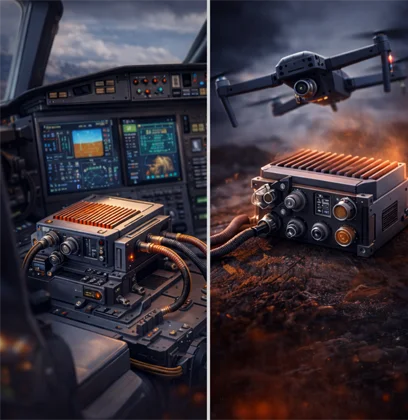
Manufacturing
Applications: Defect detection, anomaly analysis, quality inspection
Key Requirements:Zero-defect production, instant alerts, <50ms latency

Smart Cities
Applications: Pedestrian detection, traffic analysis, pollution sensing
Key Requirements:Instant alerts, privacy, reduced cloud costs
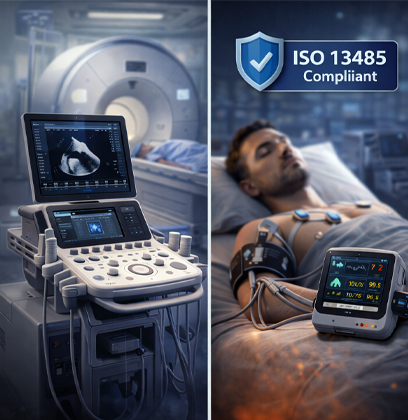
Healthcare & Wearables
Applications: ECG/PPG analysis, fall detection, seizure prediction
Key Requirements:Privacy (no cloud), low power (weeks battery), instant alerts

Automotive
Applications: Driver monitoring, pedestrian detection, road hazard detection
Key Requirements:Safety-critical, sub-100ms latency, no latency variance
Retail
Applications: Object detection, people counting, stock monitoring
Key Requirements:Real-time insights, no cloud bandwidth, instant actions

Industrial IoT
Applications: Predictive maintenance, anomaly detection in equipment
Key Requirements:Instant alerts, no internet dependency, cost reduction
CASE STUDY EXAMPLES
Akhila Labs supports a wide spectrum of healthcare and wellness applications:
Model 1: End-to-End AI Solution Development
Best For: Companies building AI-powered products from concept to launch
Includes: Model development, optimization, hardware integration, testing, deployment
Duration: 3–6 months for PoC, 6–12 months for production
Cost Range: $150K–$500K
Model 2: Model Optimization Service
Best For: Companies with trained models needing edge optimization
Includes:Quantization, pruning, hardware targeting, latency optimization
Duration: 4–8 weeks
Cost Range:$50K–$150K
Model 3:Computer Vision Custom Development
Best For:Defect detection, quality inspection, visual anomaly detection
Includes: Data collection, model training, deployment optimization
Duration: 8–16 weeks
Cost Range: $100K–$300K
Model 4: Anomaly Detection Pipeline
Best For: Predictive maintenance, equipment monitoring, healthcare analytics
Includes:Time-series feature engineering, model selection, edge deployment
Duration: 6–12 weeks
Cost Range:$75K–$200K
Model 5: Edge AI Architecture Consultation
Best For: Strategic guidance on ML hardware selection and deployment
Includes:Tech selection, hardware evaluation, architecture recommendations
Duration: 2–4 weeks
Cost Range:$20K–$50K
INDUSTRIES SERVED
Frequently Asked Questions
At Akhila Labs, embedded engineering is the foundation of everything we build. We go beyond writing firmware that runs on hardware—we engineer systems that extract
maximum performance, reliability, and efficiency from the silicon itself.
Can you run AI on battery-powered devices?
Yes. Using TinyML, we run inference on microcontrollers consuming <1mW, enabling battery life measured in months or years. Typical use: wearable health monitoring, activity recognition.
How much does model optimization cost?
Depends on model complexity. Simple CNN: 4-6 weeks, $50K. Complex LSTM: 8-10 weeks, $150K. We provide fixed-price quotes after analyzing your model.
Can you deploy models you didn't train?
Yes. You bring a trained model; we optimize it for your target hardware, compress it, benchmark performance. Timeline: 2-4 weeks. Cost: $25K–$75K depending on model complexity.
What's the typical accuracy loss from quantization?
Usually <1% for INT8. For INT4, expect 2-5% loss depending on model. We use quantization-aware training (QAT) to minimize loss. Custom optimization can recover accuracy.
How do you handle domain shift (training data ≠ real-world data)?
We implement federated learning: devices improve models locally on real data, sync improvements to cloud without sending raw data. We also use synthetic data augmentation during training.
Can you integrate edge AI with IoT platforms?
Absolutely. Edge AI gateway processes local data, sends insights to cloud IoT platform. This reduces bandwidth 100-1000x compared to shipping raw sensor data
How do you ensure privacy with on-device AI?
Data never leaves device. Only insights (classifications, anomaly scores) transmit to cloud. Even embeddings are non-reconstructible, preventing reverse-engineering of personal data.
Do you support Generative AI on edge?
Yes, within limits. Small Language Models (SLMs) and quantized image generation models run on high-end edge devices. Typical: summarization, context-aware responses. Full generative capability limited by device memory.
How long does model development typically take?
PoC: 4-8 weeks. Production: 3-6 months. Depends on data availability, model complexity, regulatory requirements. We deliver working prototypes incrementally.
Case Study 3: Industrial Vibration Sensor – Predictive Maintenance
Challenge A manufacturing equipment company needed vibration sensors for predictive maintenance across industrial facilities. The solution required a rugged design, reliable wireless mesh networking, and battery-powered operation with peak power consumption under 100mA. Solution High-Precision Sensing: 3-axis accelerometer (±16G range) for detailed vibration analysis. Edge AI Processing: STM32L476 MCU running anomaly detection algorithms locally. Mesh […]
Case Study 2: Medical-Grade Wearable ECG Monitor – FDA 510(k) Cleared
Challenge A healthcare startup needed to develop an ECG wearable that met FDA Class II requirements, using medical-grade components and biocompatible materials. The device also required ultra-low power consumption (under 2mA average) while maintaining clinical-grade accuracy. Solution Medical-Grade Components: Selected components meeting AEC-Q200 equivalent standards. Biocompatible Design: Silicone enclosure and electrode materials safe for prolonged […]



Subscribe to the Akhila Labs Newsletter
Get the latest insights on AI, IoT systems, embedded engineering, and product innovation — straight to your inbox.
Join our community to receive updates on new solutions, case studies, and exclusive announcements.