
Connected Intelligence
End-to-End IoT Platform Engineering
Akhila Labs designs and deploys complete IoT ecosystems—from smart sensor networks and intelligent edge gateways through secure cloud platforms to mobile applications. We deliver real-time monitoring, predictive analytics, and autonomous response across industries. With 50+ proven deployments and management expertise for 500K+ devices, we transform operational data into competitive advantage

Multi-protocol mastery: BLE, Wi-Fi, Zigbee, Thread, LoRaWAN, cellular, Matter, custom stacks
Proven scalability: 500K+ devices managed in production with 99.9% uptime
Edge processing with TinyML: local decision-making, instant alerts, reduced bandwidth costs
Complete security: device provisioning, secure OTA, end-to-end encryption, compliance-ready
Integrated Ahmedabad advantage: embedded+IoT+cloud expertise under one roof
Cloud-agnostic architecture: AWS, Azure, GCP, or on-premise—no vendor lock-in
Overview
WHAT IS IOT ARCHITECTURE?
Internet of Things (IoT) Architecture
The Internet of Things is more than “connecting devices.” A robust IoT platform
manages large-scale devices, processes data securely, and delivers actionable insights.
Core Architecture Layers
- Device & Connectivity: Sensors, actuators, and communication protocols linking devices to the cloud
- Edge & Cloud Processing: Local computation for fast decisions and cloud systems for analytics and management
- Application Layer: Dashboards, mobile apps, and business logic
Early architecture decisions are critical—mistakes become costly as systems scale.
We help companies transition from small prototypes to large-scale deployments successfully.


Core IoT Competencies
Multi-Protocol Sensor Networks
- We architect networks using the right protocol for each use case: BLE for personal health devices, Zigbee for smart home mesh, LoRaWAN for wide-area rural deployments, cellular for mobile assets, Wi-Fi for high-bandwidth scenarios. We ensure seamless interoperability and protocol coexistence.
IoT Gateway & Edge Computing
- Gateways are the intelligence layer. We design gateways that aggregate diverse sensors, run edge AI models, enforce security policies, buffer data during outages, and provide local APIs for sub-millisecond response.


Device Provisioning & Fleet Management
- Production deployments require automated provisioning, secure certificate management, OTA updates, remote diagnostics, and health monitoring across thousands of devices. We architect end-to-end lifecycle management.
Time-Series Data Pipelines
- IoT generates massive data streams. We architect efficient ingestion handling high-throughput sensor data, applying transformations (aggregation, windowing, feature extraction), and feeding analytics and visualization systems.


Cloud-Native IoT Platforms
- We build on AWS (IoT Core, Greengrass, Kinesis), Azure (IoT Hub, Stream Analytics), or GCP (Cloud IoT, Dataflow), leveraging serverless architectures, Kubernetes, and event-driven compute for elastic scaling.
Mobile & Web Interfaces
- Connected devices need compelling interfaces. We develop native iOS/Android apps, responsive web dashboards, and real-time notifications giving users visibility and control.


Security-First Architecture
- From hardware-backed security and zero-touch provisioning through encrypted transport, API authentication, and cloud access controls—security is embedded, not bolted on.
DIFFERENTIATORS
WHY AKHILA LABS? KEY DIFFERENTIATORS
DIFFERENTIATORS

End-to-End IoT Ownership
We architect the entire system—from firmware through edge through cloud—ensuring seamless integration across all layers.

Security-First
Hardware-backed security, device provisioning, encrypted transport, API authentication, cloud access controls—security is foundational, not an afterthought.
Cloud Agnosticity
AWS, Azure, GCP, or on-premise—we architect platforms not locked into one vendor, reducing risk and enabling future flexibility.
Multi-Protocol Mastery
Production experience with BLE, Wi-Fi, Zigbee, Thread, LoRaWAN, NB-IoT, LTE-M. We optimize each for your use case and ensure coexistence in crowded RF environments.
Edge AI Integration
We combine IoT data collection with edge ML for real-time inference, reducing cloud dependency and bandwidth while enabling offline operation.
Ahmedabad Deep Tech Integration
Embedded systems + IoT + cloud expertise under one roof. Our Ahmedabad-based team combines hardware and software disciplines organically, creating genuinely integrated solutions.
Proven Scalability
We’ve deployed IoT systems for 500K+ devices. We’ve navigated database bottlenecks, message queue congestion, firmware OTA challenges—the hard lessons are baked into our approach.
Rapid Iteration & Production Readiness
Unlike solo consultants, we deliver production systems: monitoring, alerting, rate limiting, fault recovery, operational dashboards included from day one.
Standards-Driven & Compliant
We’re active in open IoT standards (Matter, Thread, MQTT, CoAP). We build platforms compliant with GDPR, HIPAA, CCPA, IEC 62443.
Capabilities
TECHNICAL CAPABILITIES
Cloud & IoT Platforms
- AWS: IoT Core, Greengrass, Lambda, DynamoDB, Kinesis
- Azure: IoT Hub, Stream Analytics, Functions, CosmosDB
- GCP: Cloud IoT, Pub/Sub, Dataflow, BigQuery
- Open-source: Mosquitto, Thingsboard, Node-RED, Home Assistant
Edge Compute & Gateways
- Raspberry Pi 4/5, Jetson Nano/Orin
- Raspberry Pi CM4-based custom designs
- EdgeAI accelerators: USB TPU, Hailo-8
- Docker + Docker Compose for containerized apps
Mobile Development
- iOS: Swift, SwiftUI, Combine framework
- Android: Kotlin, Jetpack Compose
- Cross-platform: Flutter, React Native
- Backend: Node.js/Express, Python/FastAPI, Go
Data & Analytics
- InfluxDB, Prometheus (time-series)
- PostgreSQL + TimescaleDB, CockroachDB
- Apache Kafka, AWS Kinesis Streams
- Grafana for visualization
DevOps & Infrastructure
- Docker, Docker Compose, Kubernetes (k3s)
- CI/CD: GitHub Actions, GitLab CI, Jenkins
- Infrastructure-as-Code: Terraform, CloudFormation
- Monitoring: Prometheus, ELK stack, CloudWatch
-
- Moving Intelligence Closer to the Data Source:
Processing critical data directly at the edge to reduce latency and enable faster decision-making. - Local Rules Engines:
Running logic on the gateway to trigger immediate actions (e.g., “stop machine if vibration > threshold”) without cloud round-trip latency.
- Moving Intelligence Closer to the Data Source:
- Sensor Nodes:
Ultra-low-power designs using energy harvesting or coin-cell batteries, capable of running for years. We integrate diverse sensors such as environmental (temp/humidity), inertial (accelerometers for vibration), and biosensors. - Intelligent Gateways:
Custom gateways based on Linux (i.MX, Raspberry Pi CM4) that aggregate sensor data, perform local edge processing, and manage upstream connectivity. - Connectivity:
Implementation of diverse radio stacks including LoRaWAN for long-range/low-power, NB-IoT/LTE-M for cellular penetration, and Wi-Fi 6 / BLE 5.3 for local mesh networks.
Moving intelligence closer to the data source.
- Device Management:
Automated provisioning workflows (Zero-Touch Provisioning), digital twin synchronization, and fleet-wide OTA campaign management. - Data Pipelines:
High-throughput ingestion using MQTT/CoAP. Storage in time-series databases such as InfluxDB and TimescaleDB for efficient retrieval of historical sensor data. - Visualization:
Custom dashboards tailored to specific user roles (e.g., a “technician view” vs. an “executive view”).
TECHNOLOGY STACK

Wireless Chipsets & Modules
Bluetooth: Nordic nRF, Broadcom, Texas Instruments
Wi-Fi: ESP32, Broadcom, Qualcomm
Zigbee/Thread: Silicon Labs (EFR32), Texas Instruments
LoRaWAN: Semtech, Murata, Laird
Cellular: u-blox, Quectel, Cinterion, Sierra Wireless

Cloud & IoT Platforms
AWS: IoT Core, Greengrass, Lambda, DynamoDB, Kinesis
Azure: IoT Hub, Stream Analytics, Functions, CosmosDB
GCP: Cloud IoT, Pub/Sub, Dataflow, BigQuery
Open-source: Mosquitto, Thingsboard, Node-RED, Home Assistant

Edge Compute & Gateways
Raspberry Pi 4/5, Jetson Nano/Orin
Raspberry Pi CM4-based custom designs
EdgeAI accelerators: USB TPU, Hailo-8
Docker + Docker Compose for containerized apps

Mobile Development
iOS: Swift, SwiftUI, Combine framework
Android: Kotlin, Jetpack Compose
Cross-platform: Flutter, React Native
Backend: Node.js/Express, Python/FastAPI, Go

Data & Analytics
InfluxDB, Prometheus (time-series)
PostgreSQL + TimescaleDB, CockroachDB
Apache Kafka, AWS Kinesis Streams
Grafana for visualization

DevOps & Infrastructure
Docker, Docker Compose, Kubernetes (k3s)
CI/CD: GitHub Actions, GitLab CI, Jenkins
Infrastructure-as-Code: Terraform, CloudFormation
Monitoring: Prometheus, ELK stack, CloudWatch
INDUSTRIES SERVED

Healthcare
Applications: Remote patient monitoring, asset tracking
Key Requirements: Security (HIPAA), reliability, real-time alerts

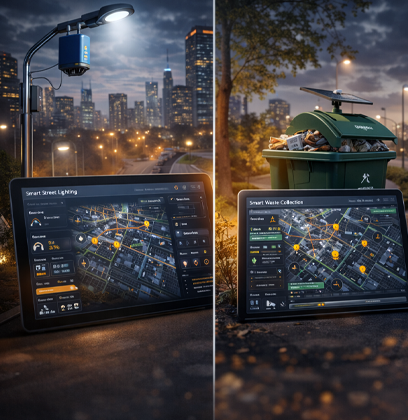
Smart Cities
Applications: Traffic, environmental, parking, safety
Key Requirements: Scalability (100K+ devices), low power (LoRaWAN)

Smart Buildings
Applications: HVAC, occupancy sensing, energy monitoring
Key Requirements: Interoperability (Matter/Thread), local control

Agriculture
Applications: Soil/crop/livestock monitoring
Key Requirements: Wide coverage (LoRaWAN), low cost, battery life

Manufacturing
Applications: Production monitoring, predictive maintenance
Key Requirements: Reliability, edge decision-making, real-time
Consumer IoT
Applications: Smart home, wearables, appliances
Key Requirements: UX, local control, privacy, fast response
CASE STUDY EXAMPLES
Akhila Labs supports a wide spectrum of healthcare and wellness applications:
Model 1: End-to-End IoT Platform Development
Best For: New IoT solutions from concept to launch
Includes:Architecture, firmware, cloud, mobile, DevOps, security
Duration: 6–18 months
Cost Range: $1M–$3M+
Model 2: Dedicated IoT Engineering Team
Best For: Ongoing roadmap execution
Includes: 3–5 engineers (firmware, cloud, mobile, DevOps), agile sprints
Duration: 12–36+ months
Cost Range: $100K–$150K per engineer/month
Model 3: IoT Gateway & Edge Platform
Best For: Intelligent local compute without full cloud platform
Includes: Edge OS, protocol translation, local AI, APIs
Duration: 8–16 weeks
Cost Range: $150K–$400K
Model 4: Cloud Platform & Analytics
Best For: Devices+firmware exist, need backend infrastructure
Includes: Architecture, data pipelines, dashboards, device management
Duration: 4–12 weeks
Cost Range: $100K–$300K
Model 5: IoT Strategy & Architecture Consultation
Best For: Evaluating opportunities or auditing existing systems
Includes: Tech selection, vendor evaluation, recommendations
Duration: 2–6 weeks
Cost Range: $15K–$40K
Frequently Asked Questions
At Akhila Labs, embedded engineering is the foundation of everything we build. We go beyond writing firmware that runs on hardware—we engineer systems that extract
maximum performance, reliability, and efficiency from the silicon itself.
AWS vs. Azure vs. GCP for IoT?
We design cloud-agnostic platforms with abstraction layers, enabling migration or multi-cloud. AWS IoT Core + Greengrass excel at edge integration. Azure for enterprise Microsoft stacks. GCP for big data analytics. We optimize for each.
How do you secure IoT systems with millions of devices?
Multi-layered: (1) Device provisioning with X.509 certificates, (2) encrypted transport (TLS/DTLS), (3) API auth and rate limiting, (4) cloud access controls, (5) secure OTA, (6) regular security audits.
What's the typical cost structure for IoT platforms?
Development ($500K–$3M depending on scope), then operations: cloud hosting ($1K–$10K/month for 100K devices), device management ($5–$50 per device/year), internal staffing (1–3 people).
How do you handle GDPR, HIPAA, CCPA?
Data privacy architected in: (1) data residency requirements, (2) encryption at rest/in transit, (3) access controls and audit logging, (4) retention/deletion policies, (5) regular compliance audits.
Can IoT systems operate offline?
Absolutely. We design edge gateways with local decision-making: data processing, rule execution, actuation happen locally. Cloud is for long-term analytics and remote management—not required for real-time operation.
How do you scale from 1,000 to 1M+ devices?
Scalability architected from day one: (1) time-series databases with horizontal scaling, (2) event-driven processing vs. polling, (3) edge aggregation pre-processing, (4) CDNs for firmware delivery, (5) horizontal service scaling (Kubernetes).
How long to add new device types or protocols?
Adding BLE device to existing system: 2–4 weeks. Adding new wireless protocol: 6–10 weeks. Once protocol stack exists, adding similar devices becomes trivial (days).
Can you integrate with legacy systems (ERP, SCADA)?
Yes. We build APIs and middleware: REST/GraphQL for modern systems, OPC-UA for industrial SCADA, HL7 FHIR for healthcare. We've integrated with SAP, Oracle, Salesforce, legacy systems.
Typical payback period for IoT investments?
Efficiency gains (energy, maintenance): 12–24 months. Revenue-generating (new services, data monetization): 6–18 months. B2B platforms: 24+ months. We conduct detailed ROI modeling during architecture phase.
Case Study 3: Industrial Vibration Sensor – Predictive Maintenance
Challenge A manufacturing equipment company needed vibration sensors for predictive maintenance across industrial facilities. The solution required a rugged design, reliable wireless mesh networking, and battery-powered operation with peak power consumption under 100mA. Solution High-Precision Sensing: 3-axis accelerometer (±16G range) for detailed vibration analysis. Edge AI Processing: STM32L476 MCU running anomaly detection algorithms locally. Mesh […]
Case Study 2: Medical-Grade Wearable ECG Monitor – FDA 510(k) Cleared
Challenge A healthcare startup needed to develop an ECG wearable that met FDA Class II requirements, using medical-grade components and biocompatible materials. The device also required ultra-low power consumption (under 2mA average) while maintaining clinical-grade accuracy. Solution Medical-Grade Components: Selected components meeting AEC-Q200 equivalent standards. Biocompatible Design: Silicone enclosure and electrode materials safe for prolonged […]


Subscribe to the Akhila Labs Newsletter
Get the latest insights on AI, IoT systems, embedded engineering, and product innovation — straight to your inbox.
Join our community to receive updates on new solutions, case studies, and exclusive announcements.